
About this item
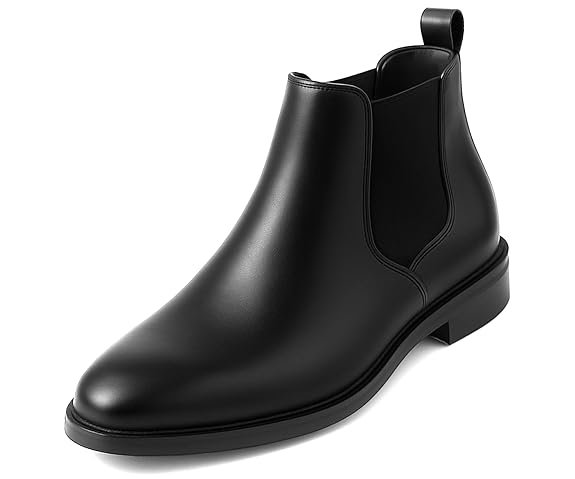
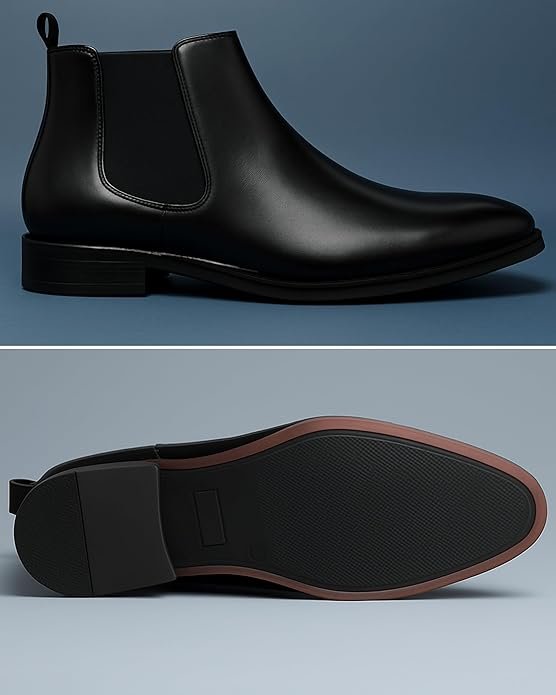
- Made from premium Synthetic Foam, these boots offer a sleek look, excellent durability, and resistance to wear and tear, ensuring they maintain their quality and appearance over time. These Chelsea Boots For Men have highly Cushioned and Padded footbed for extreme and utmost comfort
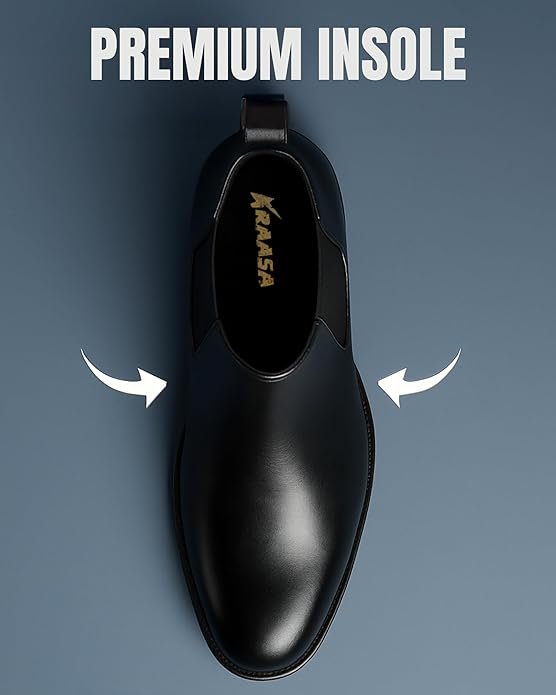
- Equipped with a super-soft cushioned insole, these boots ensure maximum comfort, reducing foot fatigue and allowing you to stay comfortable even during long hours of wear. Featuring a PU sole, these boots provide superior grip and stability on various surfaces, offering safety and confidence in every step, whether indoors or outdoors.
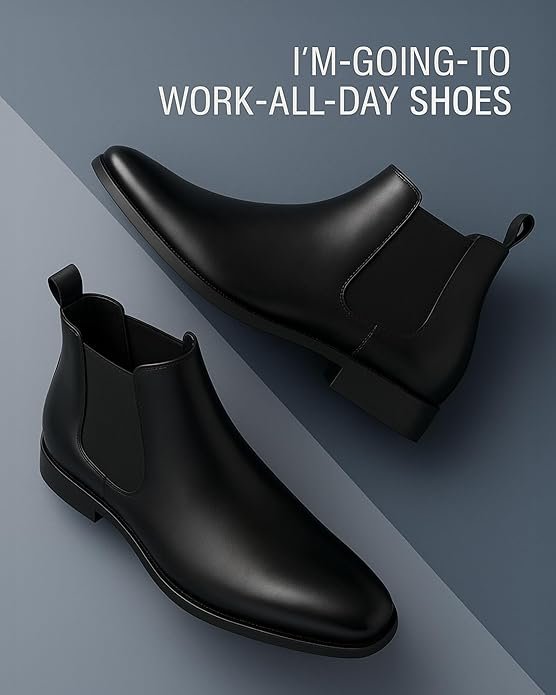
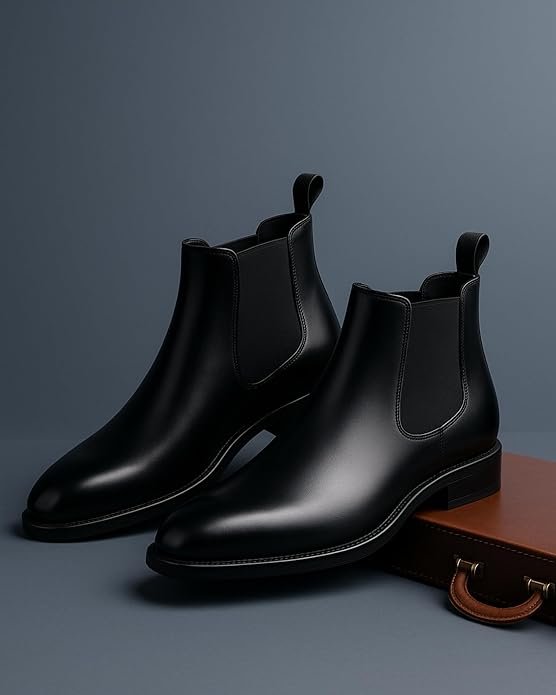
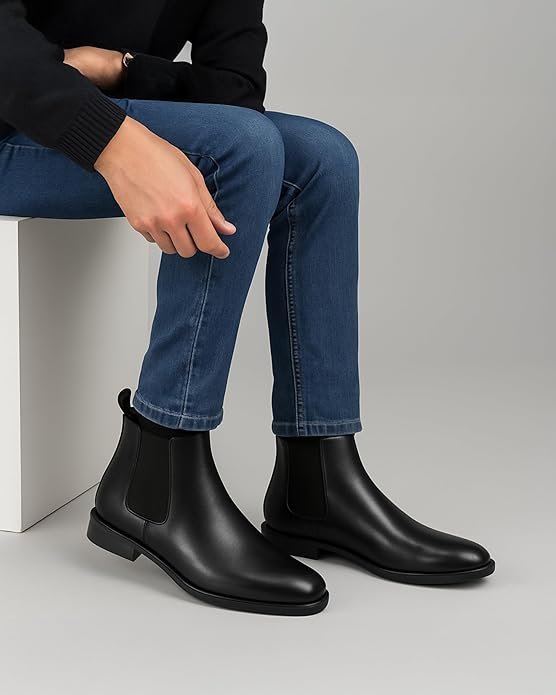
- ALL-PURPOSE – Whether you’re attending a wedding, graduation, business meeting or dinner. Our multi-purpose buckle chelsea boot is sure to make you stand out and leave a lasting impression
- Designed with enhanced feet and arch support, these boots promote better posture and comfort, making them ideal for extended wear and for those needing extra support. The interior of our chelsea shoes is lined with soft, breathable leather, providing a comfortable and snug fit
- Care Instructions: Allow your pair of shoes to air and deodorize at regular basis use shoe bags to prevent any stains or mildew dust any dry dirt from the surface using a clean cloth do not use polish or shinerBoots are among the most enduring and versatile forms of footwear in human history. Designed to cover not only the foot but also the ankle and, in many cases, part of the calf or even the thigh, boots serve both practical and aesthetic purposes. From rugged boots for men work environments to high-fashion runways, from military battlefields to winter city streets, boots have evolved across centuries to meet changing human needs while remaining a symbol of strength, protection, and style.At their most basic level, boots are structured shoes that extend above the ankle. This extended coverage distinguishes them from other footwear such as sneakers, loafers, or sandals. The primary function of boots has traditionally been protection—shielding the foot and lower leg from harsh weather, rough terrain, physical hazards, and environmental dangers. Over time, however, boots have become just as much about identity and fashion as they are about function.### Historical OriginsBoots date back thousands of years. Archaeological discoveries suggest that early humans fashioned primitive boots from animal hides, fur, and plant fibers to protect themselves from cold climates and rugged landscapes. Ancient civilizations such as the Romans developed specialized boots for their soldiers. Roman legionaries wore sturdy leather boots known as caligae, which were designed for long marches and battlefield durability.During the Middle Ages, boots became symbols of social class and occupation. Nobles wore decorative riding boots, while laborers relied on sturdy leather boots for agricultural and manual work. As manufacturing techniques improved in the 18th and 19th centuries, boots became more refined and accessible. The Industrial Revolution introduced mass production, making boots widely available across economic classes.
In the 20th century, boots diversified dramatically. They were adopted by soldiers, workers, explorers, and eventually by fashion designers. Cultural movements such as punk, grunge, and rock popularized certain boot styles, transforming them into icons of rebellion and individuality.
### Structure and Construction
The anatomy of a boot consists of several key components:
* **Upper**: The part that covers the foot and leg. It can be made from leather, suede, rubber, synthetic materials, or textiles.
* **Sole**: The bottom part that comes into contact with the ground. Soles can be made of rubber, leather, polyurethane, or composite materials designed for grip and durability.
* **Heel**: The raised portion at the back of the sole. Heels may be flat, low, high, stacked, or block-shaped.
* **Toe box**: The front section that protects the toes. Some boots feature reinforced or steel toes for safety.
* **Insole and lining**: Provide cushioning, insulation, and comfort.
* **Fastening system**: Boots may use laces, zippers, buckles, elastic panels, or slip-on designs.The materials used in boots greatly influence their performance. Leather remains one of the most popular materials due to its durability, flexibility, and ability to mold to the wearer’s foot over time. Waterproof membranes such as Gore-Tex are used in outdoor boots to prevent moisture penetration while allowing breathability. Insulated boots may incorporate fleece or synthetic padding for warmth.
### Types of Boots
There are countless types of boots, each designed for specific purposes or styles.
**Work Boots**
Designed for safety and durability, work boots often include steel or composite toe caps, slip-resistant soles, and waterproof construction. They are essential in industries such as construction, manufacturing, and mining. Brands specializing in work boots focus on resilience, shock absorption, and protection.**Combat Boots**
Originally developed for military use, combat boots are built for toughness and support. They typically feature thick soles, ankle support, and lace-up designs. Today, they are also worn as fashion statements, often associated with edgy or alternative styles.**Hiking Boots**
Hiking boots are engineered for outdoor adventures. They provide ankle stability, strong traction, and weather resistance. Deep tread patterns ensure grip on uneven terrain. Lightweight hiking boots have become popular for comfort and flexibility, while mountaineering boots are more rigid and insulated for extreme conditions.**Chelsea Boots**
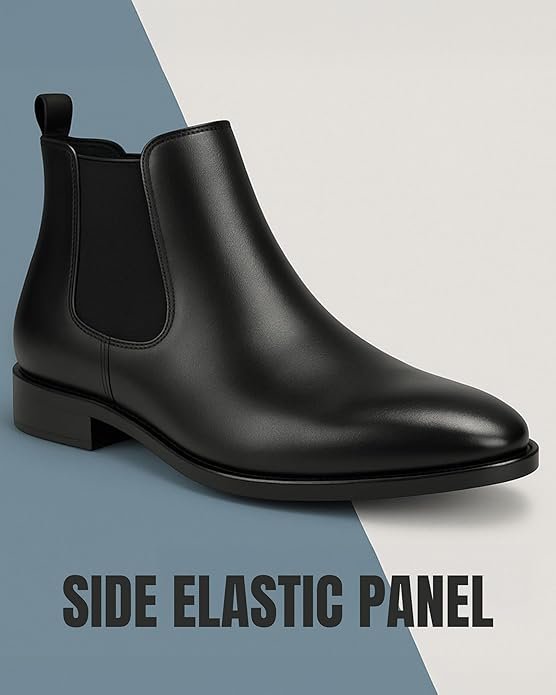
Chelsea boots are ankle-high boots with elastic side panels and no laces. Originating in Victorian England, they became widely popular in the 1960s, particularly among musicians. Their sleek silhouette makes them suitable for both casual and formal wear.**Cowboy Boots**
Originating in the American West, cowboy boots are known for their pointed toes, high shafts, and angled heels. They were designed for horseback riding and ranch work but have become iconic in Western fashion. Decorative stitching and exotic leathers often characterize this style.**Knee-High and Over-the-Knee Boots**
These boots extend up the calf or thigh. Often associated with fashion, they can be flat or high-heeled. They offer warmth and dramatic style, frequently appearing in fall and winter collections.**Snow Boots**
Designed for cold climates, snow boots are insulated and waterproof. They often have thick rubber soles and linings made from wool or synthetic materials to retain heat. Their primary focus is warmth and slip resistance on icy surfaces.### Cultural and Fashion Significance
Boots carry strong cultural symbolism. In many societies, boots are associated with authority and power. Military and police boots convey discipline and control. Cowboy boots represent independence and frontier spirit. High-heeled boots can symbolize confidence and bold fashion expression.
Fashion designers have continually reimagined boots. Luxury brands incorporate exotic materials, intricate craftsmanship, and innovative silhouettes. Seasonal trends often feature boots prominently in fall and winter collections. Over time, boots have moved beyond practicality to become essential wardrobe staples.
Pop culture has further cemented boots as iconic items. Musicians, actors, and fashion influencers have popularized specific styles. For instance, combat boots became widely associated with youth subcultures, while sleek leather boots often represent sophistication and urban style.
### Comfort and Ergonomics
Modern boot design prioritizes comfort alongside durability. Advances in cushioning technology, ergonomic shaping, and lightweight materials have significantly improved wearability. Memory foam insoles, shock-absorbing midsoles, and breathable linings enhance comfort during prolonged use.
Proper fit is essential. Boots that are too tight can cause blisters and discomfort, while overly loose boots may lead to instability. High-quality boots often require a break-in period, especially leather ones, but eventually conform to the wearer’s foot shape.
Arch support, heel stability, and toe room are critical considerations. Occupational boots may include orthopedic features to reduce fatigue during long work hours. Hiking boots must balance rigidity for support with flexibility for natural movement.
### Seasonal and Environmental Adaptation
Boots are uniquely suited for seasonal transitions. In autumn and winter, they provide warmth and protection from rain, snow, and mud. Waterproof coatings and sealed seams prevent moisture penetration. Insulated linings trap heat, making boots ideal for cold climates.
In spring and even summer, lighter boots made from breathable materials can serve as fashion statements or functional gear for festivals and outdoor events. Desert boots, for example, are lightweight and comfortable in warm weather.
Sustainability has become an important consideration in boot production. Many manufacturers now use recycled materials, ethically sourced leather, and eco-friendly dyes. Vegan boots made from synthetic alternatives to leather are also increasingly popular.
### Craftsmanship and Manufacturing
High-quality boots often reflect exceptional craftsmanship. Traditional bootmaking involves cutting, stitching, lasting, and finishing processes that require skill and precision. Goodyear welt construction is a renowned method that enhances durability and allows resoling, extending the life of the boot.
Handcrafted boots may take days to complete and can last decades with proper care. Mass-produced boots, while more affordable, often rely on cemented soles rather than stitched construction.
Customization is another aspect of boot culture. Bespoke bootmakers create tailored footwear designed to match an individual’s measurements and style preferences. Exotic leathers, personalized stitching, and custom fits elevate boots to luxury items.
### Care and Maintenance
Boot longevity depends heavily on proper maintenance. Leather boots require regular cleaning, conditioning, and polishing to prevent cracking and drying. Waterproof boots may need reproofing treatments to maintain water resistance.
Storing boots with shoe trees helps maintain their shape. Allowing boots to air out after use prevents odor and moisture buildup. Rotating footwear can also extend lifespan.
For outdoor boots, cleaning off mud and debris is essential to preserve material integrity. Conditioning treatments restore suppleness and protect against environmental damage.
### Psychological and Symbolic Dimensions
Beyond physical function, boots evoke psychological impressions. They often symbolize resilience, adventure, and confidence. Wearing boots can influence posture and presence, projecting authority or ruggedness.
In literature and film, boots frequently signify character traits. A hero’s worn leather boots may represent experience and determination. A villain’s polished boots might convey dominance or menace.
Fashion psychology suggests that footwear influences self-perception. Boots, especially structured or heeled styles, can enhance feelings of empowerment and readiness.
### Modern Trends and Innovation
Today’s boot market blends boots for men tradition with technology. Smart materials, anti-fatigue insoles, slip-resistant compounds, and sustainable fabrics redefine what boots can offer boots for men. Designers experiment with bold colors, hybrid sneaker-boot designs, and futuristic silhouettes.
Streetwear culture has embraced boots alongside athletic footwear. Meanwhile, luxury fashion houses reinterpret classic forms with avant-garde aesthetics.
E-commerce has expanded global access to diverse boot styles. Consumers can now explore heritage brands, independent artisans, and emerging designers from around the world.
### Conclusion
Boots represent far more than protective footwear. They embody centuries of human adaptation, craftsmanship, culture, and style. From their origins as survival gear in harsh environments to their status as fashion statements and professional necessities, boots have maintained a unique position in human society.
Whether built for construction sites, mountain trails, city streets, or fashion runways, boots continue to combine durability with design. Their enduring appeal lies in their balance of strength and style—protective yet expressive, practical yet powerful.
In essence, boots are not merely accessories. They are tools, symbols, and statements—crafted to support, shield, and define the people who wear them.
- Boots are among the most enduring and versatile forms of footwear in human history. Designed to cover not only the foot but also the ankle and, in many cases, part of the calf or even the thigh, boots serve both practical and aesthetic purposes. From rugged work environments to high-fashion runways, from military battlefields to winter city streets, boots have evolved across centuries to meet changing human needs while remaining chelsea boots men a symbol of strength, protection, and style.At their most basic level, boots are structured shoes that extend above the ankle. This extended coverage distinguishes them from other footwear such as sneakers, loafers, or sandals. The primary function of boots has traditionally been protection—shielding the foot and lower leg from harsh weather chelsea boots men, rough terrain, physical hazards, and environmental dangers. Over time, however, boots have become chelsea boots men just as much about identity and fashion as they are about function.## Historical Evolution in Greater DepthThe story of boots begins in prehistoric times, when early chelsea boots men humans wrapped their feet in animal hides to survive frigid climates. Archaeologists have discovered remnants of fur-lined footwear dating back thousands of years, indicating that early boots were essential survival tools rather than decorative items. These primitive designs laid the groundwork for more sophisticated constructions in later civilizations.In ancient Mesopotamia and Egypt, footwear began to signify social status. While sandals were common in hot climates, boots appeared in colder regions and mountainous territories. Ancient Persian riders wore early riding boots to protect their legs from chafing against saddles and stirrups. These designs later influenced European cavalry boots.
During the Roman Empire, soldiers relied on sturdy leather footwear engineered for long-distance marches. Although Roman caligae were technically more like sandals with thick soles, enclosed boots were used in colder provinces. As the empire expanded northward into colder regions, soldiers required footwear capable of withstanding wet and freezing conditions.
The Middle Ages saw boots become closely associated with horsemanship. Knights and noblemen wore tall leather riding boots that protected their legs during chelsea boots men combat and travel. These boots were often custom-made and sometimes ornately decorated. In contrast, peasants chelsea boots men and laborers wore simpler ankle boots for men boots made of thick leather, prioritizing durability over decoration.
The Renaissance period introduced refinement. Bootmakers experimented with dyes, embellishments, and varied shapes. Heels began to appear more prominently, influenced by boots for men Persian riding footwear. By the 17th century, heeled boots had become fashionable among European aristocracy.
In the 18th and 19th centuries, industrialization revolutionized boot production. Mechanized stitching, standardized sizing, and factory-based manufacturing dramatically increased availability. Boots were no longer exclusive to the wealthy. Soldiers in large standing armies required standardized combat boots, further advancing mass production techniques.
The 20th century marked an explosion of diversity. World wars accelerated innovations in military boot design, emphasizing durability, grip, and support. Post-war civilian markets adapted these designs for everyday use. Subcultures—punks, bikers, goths, and rock musicians—adopted specific boot styles to signal identity. Designers transformed once-utilitarian boots into high-fashion icons.
## Materials and Technological Innovation
Boot materials have evolved significantly. Traditional full-grain leather remains a benchmark for quality. It is prized for durability, breathability, and its ability to develop a patina over time. Top-grain leather offers a smoother finish, while suede provides a softer texture.
Rubber became a transformative material in the 19th century. Waterproof rubber boots enabled agricultural workers and fishermen to work in wet conditions without soaking their feet. Vulcanization processes improved elasticity and longevity.
Modern boots often incorporate advanced textiles. Nylon mesh enhances breathability in hiking boots. Waterproof membranes allow moisture vapor to chelsea boots menescape while preventing water entry. Synthetic leathers offer cruelty-free alternatives with improved water resistance and chelsea boots men lower maintenance.
Composite toe caps—made from carbon fiber or plastic—have replaced steel in many safety boots. These alternatives provide protection while reducing weight and temperature conductivity.
Memory foam and gel inserts revolutionized comfort. chelsea boots menAnti-fatigue technology, originally developed for industrial workers, now appears in everyday boots. Shock-absorbing midsoles reduce strain on joints during prolonged standing or walking.
3D printing has begun influencing boot prototypes and custom orthotics. Some manufacturers experiment with biodegradable soles and plant-based materials to address environmental concerns.
## Detailed Typology of Boots
Beyond the common categories previously discussed, boots span an extraordinary variety of specialized forms.
### Desert Boots
Inspired by military footwear used in North Africa, desert boots are lightweight, ankle-high, and typically made from suede with crepe rubber soles. They are comfortable and versatile for casual wear.
### Chukka Boots
Similar to desert boots but often slightly more formal, chukkas usually feature two or three eyelets for lacing and a streamlined silhouette suitable for business-casual attire.
### Engineer Boots
Originally designed for railroad workers, engineer boots are mid-calf boots with a buckle strap and minimal stitching. They gained popularity among motorcyclists for their protective qualities.
### Harness Boots
Distinguished by a strap-and-ring harness around the ankle, these boots are commonly associated with biker culture.
### Wellington Boots
Also known as rain boots, these waterproof boots trace their name to the Duke of Wellington. Made primarily of rubber, they are ideal for muddy and wet conditions.
### Platform Boots
Featuring thick elevated soles, platform boots became iconic during 1970s glam rock and disco culture. They remain popular in alternative fashion scenes.
### Thigh-High Boots
Extending above the knee to the thigh, these boots are dramatic fashion statements often seen on runways and in performance costumes.
### Mountaineering Boots
Engineered for extreme alpine environments, these boots feature rigid soles compatible with crampons and heavy insulation to withstand subzero temperatures.
### Tactical Boots
Used by law enforcement and security personnel, tactical boots balance lightweight agility with durability and support.
## Boots in Military History
Military innovation has significantly shaped boot design. During World War I, trench warfare required waterproofing solutions to prevent trench foot. In chelsea boots
- World War II, paratroopers received specialized jump boots with chelsea boots reinforced ankles.Modern chelsea boots menarmies emphasize chelsea boots men lightweight materials to reduce soldier chelsea boots fatigue. Combat boots are tested for slip resistance, flame retardance, and puncture protection.Military surplus boots have influenced civilian fashion boots for men repeatedly. Combat boots became staples in counterculture movements, symbolizing resistance and independence.
## Boots in Popular Culture and Media
Boots frequently appear in film and literature as symbols of character. Western films depict cowboys defined by their boots. Superheroes and villains alike wear distinctive boots that contribute to costume identity.
-
- Chelsea boots for men
Musicians have also immortalized boots. Performers across rock, country, and pop genres use boots as visual statements. The imagery of boots stomping on stage conveys power and rhythm.
In fairy tales, boots sometimes carry magical qualities—seven-league boots allowed the wearer to travel vast distances in a single step. Such myths underscore boots as instruments of transformation and mobility.
## Craftsmanship and Artistry
Bootmaking is both a technical craft and an art form. Traditional cobblers learn through apprenticeships, mastering leather selection, pattern drafting, stitching, and finishing.
Goodyear welt construction involves stitching a welt strip to both the upper and insole, then attaching the outsole. This technique allows resoling and extends lifespan. Blake stitching provides flexibility and lighter weight, though often less water resistance.
Hand-lasted boots require stretching leather over a last (a foot-shaped mold). The precision of lasting determines fit quality.
-
- Chelsea boots
Artisanal bootmakers sometimes hand-tool decorative patterns into leather. Exotic leathers such as ostrich, alligator, or python add distinctive texture.
Patina finishing—achieved through layers of dye and polish—creates depth and individuality. Each pair develops unique creases and wear patterns over time.
## Economic and Global Impact
The global boot industry represents billions of dollars annually. Major manufacturers operate across continents, balancing cost efficiency with quality control.
Emerging markets increasingly demand durable work boots as infrastructure expands. Meanwhile, luxury segments cater to consumers seeking heritage craftsmanship.
Ethical sourcing has become a focal point. Consumers scrutinize supply chains for fair labor practices and environmental sustainability.
Online retail has transformed distribution. Direct-to-consumer brands bypass traditional retailers, offering competitive pricing.
Secondhand and resale markets have grown, particularly for high-end and limited-edition boots.
## Gender, Identity, and Social Meaning
Boots transcend gender boundaries. Historically, certain boot styles were gender-specific, but modern fashion embraces fluidity. Combat boots, once exclusively masculine, are now widely worn by all genders.
High-heeled boots have served as symbols of empowerment and chelsea boots sensuality. Flat boots convey practicality and independence.
In some cultures, boots signify rites of passage. In chelsea boots men others, they denote boots for men occupational belonging—cowboy boots in ranching communities or logger boots in forestry regions.
## Climate Adaptation and Extreme Conditions
Boots designed for polar exploration must withstand chelsea boots men temperatures boots for men far below freezing. Insulation, vapor barriers, and moisture-wicking linings prevent frostbite.
Desert boots prioritize breathability and sand resistance. Jungle boots include drainage vents for humid climates.
Urban boots often combine water resistance with chelsea boots men sleek design, meeting the demands of city dwellers navigating unpredictable weather.
## Psychological and Emotional Dimensions
Footwear influences how individuals perceive themselves. Boots, especially structured or heeled designs, alter posture and gait. A firm sole can produce a confident stride.
The sound of boots striking pavement carries symbolic weight—suggesting authority or determination.
For many, boots evoke nostalgia. A worn pair may recall travels, achievements, or life transitions.
## Sustainability and the Future of Boots
Environmental awareness is reshaping production. Brands experiment with mushroom-based leather alternatives and recycled rubber soles.
Circular economy models encourage repair over replacement. Resoling services extend product life and reduce waste.
-
- Chelsea boots
Carbon-neutral manufacturing initiatives aim to minimize environmental impact.
Consumers increasingly value durability over fast fashion. Boots, when properly maintained, can last decades—aligning with sustainability goals.
## Boots in Occupational Contexts
Firefighters wear heat-resistant boots with reinforced toes. Miners rely on puncture-resistant soles. Farmers prefer waterproof boots for muddy fields.
Healthcare professionals sometimes choose supportive boots for long shifts.
Each occupational environment demands specific features—grip patterns, insulation levels, or chemical resistance.
## Regional Variations
In Russia and northern Europe, felt boots known as valenki provide warmth in extreme cold.
Australian stockmen favor elastic-sided boots for practicality.
In South America, gaucho boots reflect ranching traditions.
Cultural variations illustrate how geography shapes design.
## Symbolism in Literature and Language
Boot-related idioms permeate language: “pull yourself up by your bootstraps,” “boots on the ground,” “made for walking.” Such phrases underscore boots as metaphors for effort, readiness, and action.
In children’s stories, characters like Puss in Boots elevate footwear to magical significance.
Aesthetic Evolution in Fashion
-
- Boots for men
Runway interpretations of boots push chelsea boots men creative boundaries. Designers blend metallic finishes, sculptural heels, and unconventional shapes.
Street style photography frequently chelsea boots men highlights boots as statement pieces. Pairings with dresses, suits, or casual denim demonstrate adaptability.
Color palettes range from classic black and brown to bold reds and whites.
Texture contrasts—smooth leather against knitwear, suede against denim—enhance visual interest.
## Maintenance as Ritual
Caring for boots can become ritualistic. Polishing leather restores shine and preserves integrity.
Some enthusiasts collect multiple pairs for different occasions, maintaining each meticulously.
The aging process adds character rather than diminishing value. chelsea boots men
## Longevity and Legacy
Unlike many fashion items, boots often improve with age. Creases, scuffs, and patina tell stories.
Heirloom-quality boots may be passed down generations.
Their durability symbolizes continuity and endurance.
## Conclusion
Boots remain a testament to humanity’s ingenuity and desire for both protection and expression. Across millennia, they have shielded explorers, empowered workers, defined subcultures, and elevated fashion.
They adapt to climate, occupation, and culture while retaining a core purpose: safeguarding the foot and supporting movement. Yet beyond utility, boots carry meaning—of strength, readiness, and individuality.
From handcrafted leather masterpieces to technologically advanced performance gear, boots bridge tradition and innovation. Their presence in history, art, labor, and style ensures they will continue evolving while preserving their essential identity.
Ultimately, boots are more than footwear. They are companions on journeys—across landscapes, through challenges, and along the paths of personal expression.
- Boots for men
- Chelsea boots for men
- Chelsea boots
- Click from here
- for more info click here.
Reviews
There are no reviews yet.